
Promodata Integration for Shopify & WooCommerce: Complete Guide
Promodata Integration for Shopify & WooCommerce: Complete Guide
Managing product data efficiently is one of the biggest challenges for modern eCommerce businesses. Whether you run a Shopify store or a WooCommerce website, keeping product information accurate and updated across platforms can quickly become time-consuming.
This is where Promodata integration plays a crucial role.
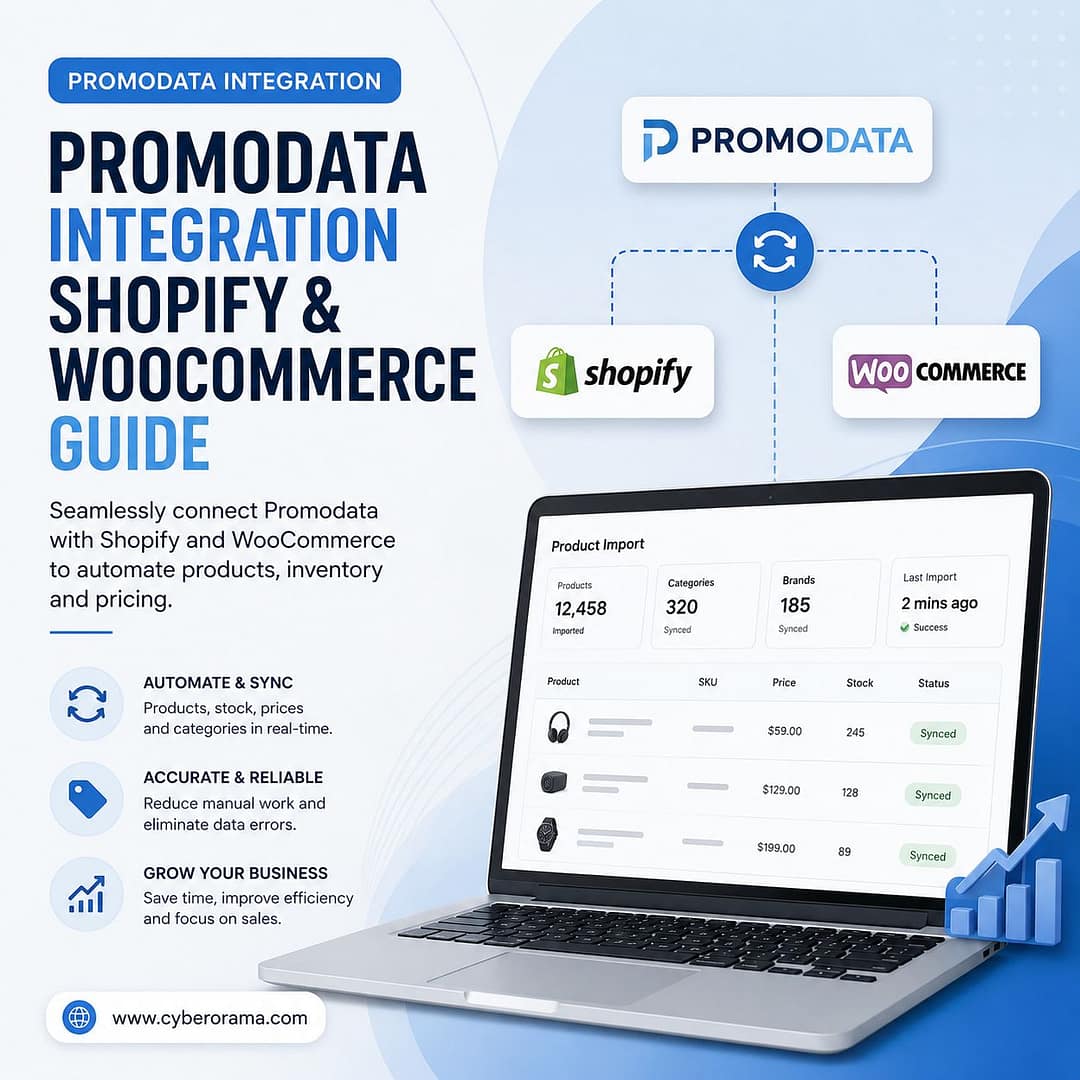
Promodata integration helps businesses automate product data management, ensuring that information such as pricing, inventory, and product descriptions remains consistent across platforms. Instead of manually updating each product, businesses can rely on centralized systems that handle data synchronization automatically.
In this guide, we will explore how Promodata integration works, its benefits, and how it can help Shopify and WooCommerce store owners improve efficiency and scalability.
What Is Promodata Integration?
Promodata integration refers to the process of connecting a centralized product data management system with eCommerce platforms like Shopify and WooCommerce.
The main objective is to create a single source of truth for all product-related data.
This includes:
- Product titles
- Descriptions
- Pricing
- Inventory levels
- Images
- Product specifications
Once integrated, any updates made in the central system are automatically reflected across your online store.
This reduces manual work and ensures consistency across multiple channels.
As online stores grow, managing product data manually becomes inefficient and error-prone.
Some common issues include:
- Incorrect product pricing
- Outdated stock levels
- Inconsistent product descriptions
- Duplicate listings
- Time-consuming manual updates
These problems not only affect operations but also impact customer experience.
By using Promodata integration, businesses can eliminate many of these challenges and improve overall store performance.
Shopify is known for its ease of use and scalability. However, managing large product catalogs manually can still be challenging.
How Promodata Works with Shopify
Promodata integration connects to Shopify using APIs or integration tools that allow automatic data synchronization.
This enables:
- Automatic product uploads
- Bulk updates for product details
- Real-time inventory synchronization
- Pricing updates
- Product categorization

1. Efficient Product Management
Managing thousands of products becomes easier with automation.
2. Reduced Errors
Automated updates minimize human mistakes in pricing and inventory.
3. Time Savings
Store owners can focus on business growth instead of manual tasks.
4. Scalability
As your Shopify store grows, Promodata integration supports expansion without additional workload.
Promodata Integration for WooCommerce
WooCommerce offers flexibility and customization, but product data management can become complex as your catalog grows.
How Promodata Works with WooCommerce
Promodata integration connects to WooCommerce through plugins, APIs, or middleware solutions. This allows:
- Automated product imports
- Inventory synchronization
- Attribute and variation management
- Category mapping
Benefits of Promodata WooCommerce Integration
1. Centralized Control
All product data is managed from one system.
2. Automation of Repetitive Tasks
Manual updates are replaced with automated workflows.
3. Consistency Across Products
Customers see accurate and updated information.
4. Improved Performance
Efficient data handling improves store speed and user experience.
Key Features of Promodata Integration
1. Real-Time Data Synchronization
Product data updates instantly across platforms.
2. Bulk Product Management
Handle large catalogs without manual effort.
3. Multi-Platform Integration
Supports Shopify, WooCommerce, and other systems.
4. Error Reduction
Automation reduces human errors.
5. Data Standardization
Ensures consistent product information across channels.
How Promodata Integration Improves Business Efficiency
1. Saves Time
Automated processes replace manual work.
2. Improves Accuracy
Consistent data reduces customer complaints.
3. Enhances Customer Experience
Accurate product information builds trust.
4. Supports Growth
Businesses can scale operations without increasing workload.
Common Use Cases
Promodata integration is useful for:
- Online retailers with large catalogs
- Dropshipping businesses
- Multi-channel sellers
- B2B eCommerce platforms
- Brands expanding into new markets
Challenges in Promodata Integration
While Promodata integration offers many benefits, there are some challenges to consider:
1. Initial Setup
Integration requires proper configuration and setup.
2. Data Mapping
Product attributes must be mapped correctly between systems.
3. Compatibility Issues
Some platforms may require custom integration solutions.
4. Ongoing Maintenance
Monitoring is required to ensure smooth data synchronization.
Best Practices for Successful Integration
1. Organize Product Data
Ensure data is clean and structured before integration.
2. Choose the Right Tools
Use reliable integration tools compatible with your platform.
3. Test Before Deployment
Run tests to identify and fix issues.
4. Monitor Regularly
Track synchronization and resolve errors quickly.
5. Plan for Growth
Choose solutions that support future expansion.
Future of Product Data Integration in eCommerce
The future of eCommerce will rely heavily on automation and intelligent systems.
Trends include:
- AI-powered product data management
- Automated categorization
- Real-time multi-channel syncing
- Advanced analytics
Businesses that adopt systems like Promodata integration early will be better positioned to compete in a growing digital marketplace.
Conclusion
Managing product data efficiently is essential for any eCommerce business. As stores grow and expand across platforms, manual processes become unsustainable.
Promodata integration provides a practical solution by automating product data management, improving accuracy, and enabling scalability for Shopify and WooCommerce stores.
By implementing structured data integration, businesses can focus on growth, customer experience, and long-term success instead of repetitive operational tasks.

Recent Posts

How Much Does It Cost to Hire a Web Developer in 2026?

