
What Should You Look for When Hiring a Magento Developer?
Look for practical experience that matches your store and the work you need done. A suitable developer should understand Magento 2 architecture, PHP, themes and extensions, ecommerce workflows, APIs, databases, performance and the requirements of maintaining a live online store. Ask how they would approach your specific requirement, not just which technologies they use.
When Should You Hire a Magento Developer?
You may need specialist Magento development when your store requires changes that cannot be handled effectively through standard configuration or an existing extension. Common situations include:
- Building a new Magento ecommerce store
- Customising an existing storefront or checkout
- Developing a custom module or extension
- Changing product, pricing or customer workflows
- Connecting ERP, CRM or inventory systems
- Integrating payment, shipping or marketplace services
- Upgrading or migrating a Magento store
- Investigating errors or compatibility problems
- Improving storefront or backend performance
- Maintaining and extending a live store
What Type of Magento Developer Do You Need?
The right specialist depends on the work involved. Define the outcome you need before deciding whether to hire for a focused task or arrange ongoing development support.
Magento Ecommerce Developer
Works on store functionality such as catalogues, product configuration, customer accounts, pricing, cart and checkout workflows.
Magento Backend Developer
Works on modules, business logic, data handling, integrations, admin functionality and server-side troubleshooting.
Magento Frontend Developer
Works on themes, layouts, responsive storefront behaviour, navigation and customer-facing interface improvements.
Dedicated Magento Developer
Provides continuing development capacity for a store that needs regular improvements, issue resolution and technical support.
What Does a Magento Developer Do?
Depending on the project, Magento development can cover the following areas:
Magento 2 Development
Implement store functionality around products, customers, orders, pricing and business workflows.
Customisation and Extensions
Adapt existing functionality or build modules when standard features do not meet the requirement.
Theme and Storefront Work
Improve layouts, navigation, product presentation, responsive behaviour and checkout experience.
API and System Integration
Connect Magento with ERP, CRM, inventory, accounting, payment, shipping and other platforms.
Migration and Upgrades
Plan platform changes while accounting for data, extensions, custom code, integrations, URLs and SEO.
Maintenance and Troubleshooting
Investigate errors, compatibility issues, updates, security concerns and performance problems.
Magento Custom Extension Development
Standard features and third-party extensions may not cover every business process. A custom Magento module can support specific rules, automation, integrations or workflows where a suitable existing solution is unavailable. Before building a new extension, assess whether configuration or an established extension can meet the requirement more simply.
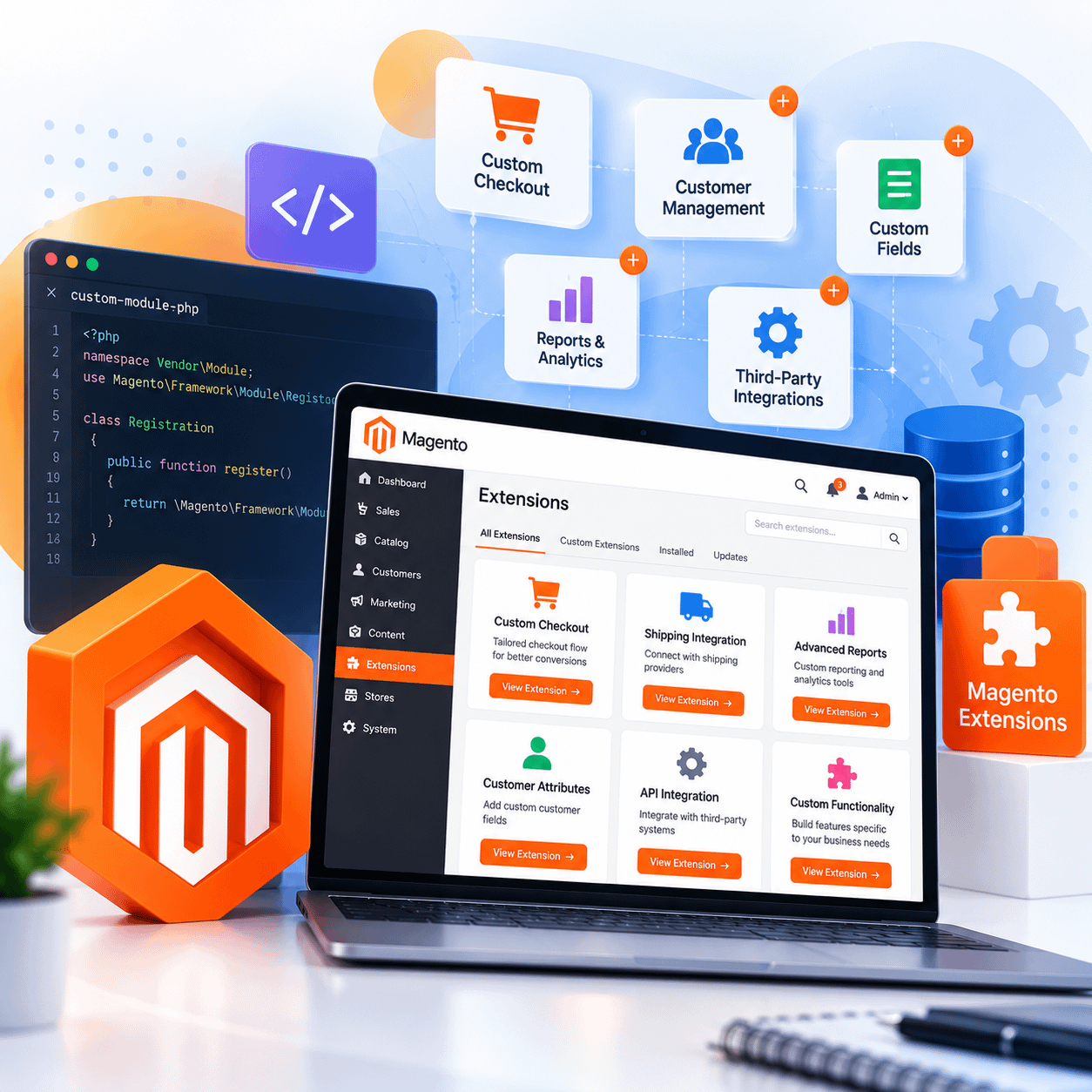
Build Functionality Around Your Business
A developer should first understand your existing store, technical environment and business workflow. That assessment helps determine whether configuration, custom development or an existing extension is the most appropriate solution.
Magento Product Customisation
Some ecommerce stores need product options and configuration beyond standard product attributes. Custom product experiences can support more detailed selections, pricing rules and customer requirements. The solution should be designed around the products you sell and the way customers make purchasing decisions.

Make Complex Product Options Easier to Use
Plan product options, validation, pricing behaviour and the customer journey together so the customisation process remains clear and manageable.
Magento Theme and Storefront Development
Your storefront affects how customers browse products, understand your offer and complete purchases. Theme development can address layout, navigation, responsive behaviour, accessibility and the presentation of important product information.
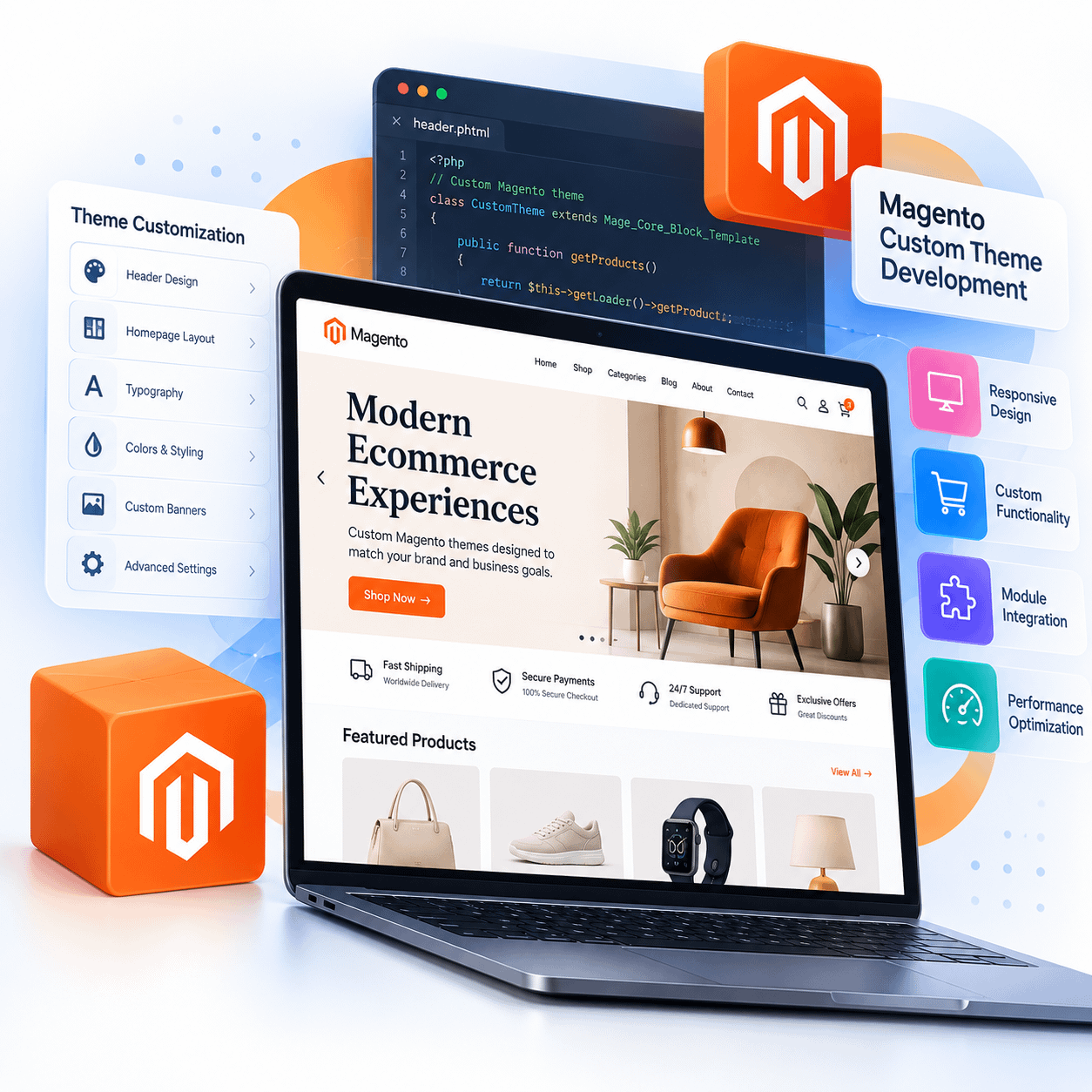
Improve the Shopping Experience
Review the storefront across desktop and mobile devices, focusing on usability, consistency, performance and the steps customers take to complete an order.
Magento API and Third-Party Integrations
Magento stores often need to exchange information with other business systems. Integration requirements may include:
- ERP and inventory management platforms
- CRM and customer management systems
- Accounting and invoicing software
- Payment gateways and shipping providers
- Marketplaces and product feed services
- Warehouse and order management systems
Before implementation, define which system owns each data field, how frequently information should synchronise, and how failed requests or mismatched records will be handled.
Magento Migration and Upgrade Projects
A Magento migration or upgrade needs careful planning. Review the current version, custom code, extensions, integrations, product and customer data, order history, URLs and SEO requirements before selecting an approach.
Before the migration
Document the current store, identify dependencies, review extension compatibility, back up data and agree on testing and rollback arrangements.
After the migration
Validate products, customers, orders, checkout, payments, integrations, redirects, analytics and key storefront functions before launch.
Magento Performance and Technical Support
Performance problems can originate in application code, database queries, caching, extensions, hosting resources or frontend assets. A useful investigation measures the current behaviour and identifies the bottleneck before changes are made.
Ongoing technical support may include compatibility checks, troubleshooting, updates, security maintenance, monitoring and planned improvements to store functionality.
Questions to Ask Before Hiring a Magento Developer
Use these questions to understand how a developer approaches real project work:
What Magento versions and projects have you worked on?
Ask for examples relevant to your store type, platform version and required functionality.
How will you review our existing store?
Ask how the developer will inspect the current codebase, theme, extensions, integrations and hosting environment before estimating changes.
How will you approach custom functionality?
Ask whether configuration or an existing extension could meet the requirement, and how custom code will be tested, documented and maintained.
Can you integrate Magento with our other systems?
Discuss the systems involved, data that needs to move, synchronisation rules, error handling and how integration failures will be monitored.
How will you investigate performance problems?
Ask what will be measured and how the investigation will cover application code, database queries, caching, hosting resources and frontend assets.
What support is available after the work is completed?
Clarify handover, documentation, defect handling, maintenance scope and how future work will be requested and estimated.
How Much Does It Cost to Hire a Magento Developer?
Magento development costs depend on the scope and complexity of the work, the experience required, the condition of the existing store, integrations, migration requirements and the engagement model. A contained bug fix is different from a project involving custom modules, complex integrations or a platform migration.
Before comparing estimates, provide each developer with the same project requirements and ask for the assumptions, deliverables, exclusions, dependencies and testing approach behind the estimate.
To discuss your requirements, use the Cyberorama project quote form.
What About Hiring a Magento Developer in India?
Businesses considering developers in India can compare independent specialists, dedicated developers and development companies. Evaluate technical fit, communication, project management, working-hour overlap, code ownership, security practices and post-launch support. Location and hourly cost should be considered alongside the quality and suitability of the proposed delivery approach.
Match the Developer's Experience to Your Project
| Your requirement | Relevant experience to look for |
|---|---|
| New Magento store | Store architecture, catalogue, checkout and launch planning |
| Existing store customisation | Codebase review, theme and extension compatibility |
| New business functionality | Magento module and custom extension development |
| ERP, CRM or inventory connection | API integration, data mapping and synchronisation |
| Slow or unstable store | Performance profiling and technical troubleshooting |
| Migration or upgrade | Data migration, compatibility, redirects and testing |
| Regular technical requirements | Maintenance, release management and ongoing development |
Common Mistakes When Hiring a Magento Developer
Choosing Only on Price
A low initial estimate may exclude important work. Compare scope, assumptions, testing and ongoing maintenance as well as price.
Ignoring Relevant Experience
General web development experience does not automatically demonstrate experience with your Magento setup or requirements.
Leaving Integrations Until Later
External systems can affect architecture, data structures, testing and project scope. Identify integration needs early.
Not Planning Post-Launch Support
Agree how defects, updates, monitoring and future enhancements will be handled after the initial work is delivered.
Magento Development for Complex Ecommerce Stores
Stores with large catalogues, B2B requirements, custom pricing, complex checkout processes or multiple business-system integrations may need a more involved development approach. The important first step is to document the current setup, the business problem and the outcome the store needs to support.
If you are assessing providers, review the scope of Cyberorama's Magento development and support services and decide whether they match the technical work your store requires.
How Cyberorama Can Help With Your Magento Project
Cyberorama works on Magento development requirements that go beyond basic store configuration, including custom functionality, extensions, theme work, integrations, migration, troubleshooting and ongoing technical support. The appropriate approach depends on your current store, the issue you need to solve and the outcome you want.
When you contact us, include your Magento version if known, your store URL, the work required, any relevant error messages and your preferred timeframe. This gives us useful context for an initial discussion.
View Magento development services or send your project enquiry.
Related Magento and Ecommerce Resources
Magento Development Services
Explore custom development, extensions, integrations, migration and support.
Ecommerce Development Services
Explore ecommerce development across Magento, Shopify, WooCommerce and related platforms.
Cyberorama Portfolio
Review examples of web development and ecommerce work.
Frequently Asked Questions About Hiring a Magento Developer
What should I look for when hiring a Magento developer?
Look for relevant Magento experience, PHP skills, ecommerce knowledge, integration experience and an approach to testing and maintaining the work. Prioritise experience that matches your store and requirements.
Can a Magento developer work on an existing store?
Yes. A developer can assess and work on existing themes, extensions, custom functionality, integrations, errors and performance issues. They should review the current implementation before proposing changes.
Can a Magento developer build a new ecommerce store?
Yes. Work can include store setup and customisation, catalogue structure, storefront, checkout, payment configuration, integrations and launch preparation.
Can Magento integrate with ERP and CRM systems?
Magento can exchange data with external systems through suitable APIs or integration tools. The implementation depends on the platforms, data requirements and synchronisation rules.
Can I hire Magento developers for ongoing support?
Ongoing support can cover troubleshooting, updates, compatibility work, performance improvements, monitoring and additional development. Agree the scope and response arrangements in advance.
Should I hire an individual developer or a development company?
An individual may suit a focused task, while a development company may be appropriate when the project needs a broader range of technical skills or continuing delivery support.
How do I get an estimate for my Magento project?
Describe your current store, the required outcome, relevant integrations, known issues and timeframe. A useful estimate should explain scope, assumptions, deliverables and exclusions.
Need Help With Your Magento Store?
Whether you need to fix an existing store, develop custom functionality, connect business systems, plan a migration or arrange ongoing support, tell us what you are trying to achieve. Share your requirements and start a conversation with Cyberorama about your Magento project.
Discuss Your Magento Project View Magento Services